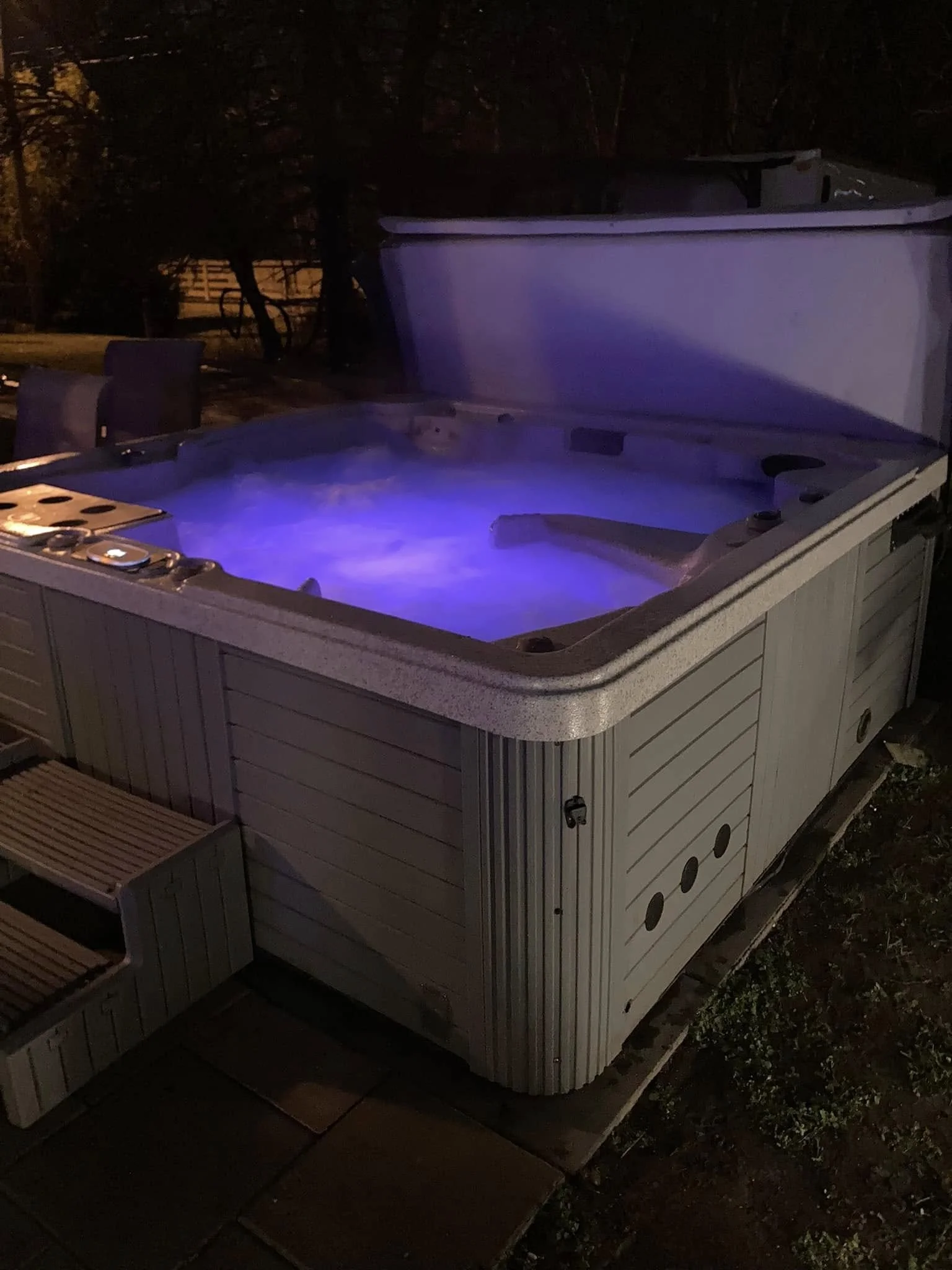
Why Is My Hot Tub Not Heating? (7 Common Causes)
It stopped heating at the worst possible time. Here's how to figure out why, straight from a 35-year veteran.
You step outside, lift the cover, and instead of a relaxing 102 degrees, you're greeted with lukewarm water. It's frustrating, and it always seems to happen right before you planned to use it. But before you panic, understand that a hot tub not heating is one of the most common service calls we get in Toledo. Here's a breakdown of what's likely going on.

1Flow Switch or Pressure Switch Issue (Most Common)
Hot tubs have built-in safety mechanisms to prevent the heater from firing if there isn't enough water flowing through the system. If the heater runs dry, it will burn out almost instantly. The flow switch detects water movement. If it's stuck, broken, or miscalibrated, it will tell the system not to heat, even if water is actually flowing.
What you'll notice: The pump is running, water is moving, but you get a "FLO" or "FL" error code on your topside panel, and the water stays cold.
DIY or Pro? This usually requires a pro to replace and properly calibrate the new switch to ensure your heater isn't put at risk.
2Burned Out Heating Element
Just like the element in your oven or a space heater, the heating element in your hot tub can simply burn out over time. It's a consumable part that works incredibly hard, especially during Ohio winters.
What you'll notice: The spa seems to be functioning perfectly—jets work, no error codes—but the water temperature slowly drops and never recovers. Sometimes, a burned-out element will cause your GFCI breaker to trip immediately when the heater tries to engage.
DIY or Pro? Pro. Replacing a heating element involves opening the plumbing manifold, dealing with 240V electrical connections, and ensuring a watertight seal upon reassembly.
3High-Limit Sensor Tripped
The high-limit sensor is another critical safety device. Its job is to shut down the heater if the water temperature gets dangerously hot (usually around 108-110°F). Sometimes, these sensors fail or get "stuck" in the tripped position, preventing the heater from turning back on even when the water is cold.
What you'll notice: You might see an "OH" (Overheat) or "HL" (High Limit) error code on the display, even though the water is freezing.
DIY or Pro? Pro. The sensor needs to be tested with a multimeter and likely replaced.
Not Sure What A Repair Will Cost?
Stop guessing. Use our free, interactive Spa Repair Cost Estimator to get a ballpark range for your specific issue in under 60 seconds.
Try the Cost Estimator4Clogged Filter Restricting Flow
Remember the flow switch we talked about? It needs a certain amount of water pressure to activate. A dirty, clogged filter drastically reduces water flow. If the flow drops too low, the heater shuts off to protect itself.
What you'll notice: Weak jet pressure, cloudy water, and possibly a "FLO" error code.
DIY or Pro? DIY! This is the first thing you should check. Remove your filter and hose it off thoroughly. If it's old and stained, replace it. Run the spa without the filter for a few minutes; if the heater kicks on, you've found your problem.
5Air Lock in the Pump
If you recently drained and refilled your hot tub, an air bubble might be trapped in the pump or plumbing. This "air lock" prevents the pump from moving water, which means the flow switch won't engage, and the heater won't turn on.
What you'll notice: The pump is humming, but no water is coming out of the jets.
DIY or Pro? DIY. You can usually clear an air lock by slightly loosening the union fitting on the discharge side of the pump until you hear air hissing out, then tightening it once water starts to drip.
6Thermostat or Temperature Sensor Failure
The temperature sensor tells the brain of the hot tub how hot the water is. If it fails, the system might think the water is already 104°F when it's actually 60°F, so it never tells the heater to turn on.
What you'll notice: The temperature displayed on the control panel is wildly inaccurate (e.g., showing 105°F when the water is clearly cold), or you see an "Sn" or "Sensor" error code.
DIY or Pro? Pro. It requires diagnostic testing and replacement of the specific sensor for your spa's control pack.
7Calcium Scale Buildup on Heater Element
If your water chemistry hasn't been balanced properly, calcium scale can build up on the heating element. This scale acts as an insulator. The element gets hot, but the heat can't transfer efficiently to the water. Eventually, this causes the element to overheat and burn out.
What you'll notice: The spa heats very slowly, or you frequently get overheat errors.
DIY or Pro? Pro to replace the damaged element, but DIY to maintain proper water chemistry moving forward to prevent it from happening again.
When to Call a Pro
If you've checked the basics—cleaned the filter, ensured the water level is correct, and checked for air locks—and your hot tub still isn't heating, it's time to call an expert. Guessing with 240V electrical systems and water is a dangerous game.
Spa Pro Toledo offers a flat $120 diagnostic call. We'll tell you exactly what's wrong and what it'll cost to fix, before any work starts.
Frequently Asked Questions
Recommended Reading
How Long Do Pool Liners Last? (And 8 Signs Yours Is Due)
Vinyl pool liners don't last forever. Here is how to tell if yours has a few seasons left, or if it's time to replace it.
Should I Repair or Replace My Spa?
Not sure if your hot tub is worth fixing? Take our 60-second quiz to get a clear recommendation based on age and condition.
Need Your Hot Tub Fixed Fast?
Licensed technicians. All makes and models. Serving Toledo and SE Michigan.
Call Spa Pro: 419-764-8235